-
Who This Checklist is For
-
Step 1: Compare the 'Basic' Package, Not the 'Deluxe'
-
Step 2: Calculate the 'Hidden' Logistical Costs (i.e., Trucking & Crew)
-
Step 3: Get the 'Small Operator' Promise in Writing
-
Step 4: Scrutinize the 'Breakfast' and 'Eddie Kids' of the Contract
-
Step 5: Build a 'Break Glass' Exit Strategy
-
Common Mistakes I See Others Make
Who This Checklist is For
If you're an independent operator or a small-to-mid-size E&P company looking at Halliburton for drilling, fracturing, or cementing services – and you're worried that your budget is a whisper in a hurricane – this checklist is for you. I've been managing service procurement for six years, and I've seen the gap between what the sales deck promises and what the invoice actually says. This isn't about bashing big oilfield service companies; it's about making sure you don't get lost in their scale.
Here are the 5 steps I use before signing any contract, especially when the sales rep uses phrases like 'global standard' or 'integrated solution.'
Step 1: Compare the 'Basic' Package, Not the 'Deluxe'
Basically, Halliburton will pitch their most integrated, high-tech solution. It's impressive. But it's also expensive. Your first job is to ask for the stripped-down, 'no-frills' version of the service.
In my experience, the 'Deluxe' package often includes:
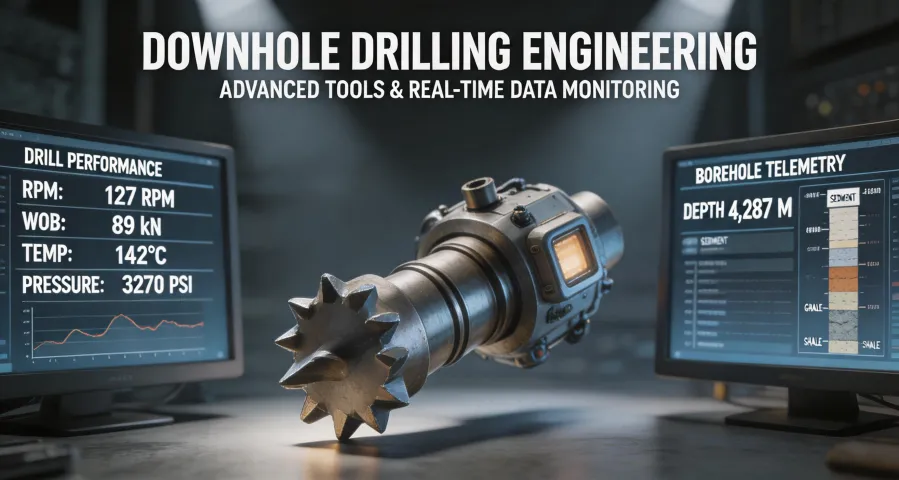
- Real-time data monitoring (which you might not have the staff to analyze)
- On-site project management (a premium charge)
- Advanced chemical blends (that you may not need for a standard well)
Ask them: "What does the base-level service look like for a well of this depth and geology? And what exactly does the upgrade buy me?" I once saved about 18% on a fracturing job just by stripping out the 'integrated real-time monitoring' that we had no one to actually monitor.
Step 2: Calculate the 'Hidden' Logistical Costs (i.e., Trucking & Crew)
This is the rookie mistake I made in my first year. The quote for Halliburton's cementing service looked great – the unit price was competitive. But I didn't factor in the logistics surcharge for our remote basin.
Here's the deal: the base price assumes a certain proximity to their service yard. If your site is in a remote area (like the Permian edge or a shallow basin), you'll get hit with:
- Mobilization fees: Getting the equipment to your site.
- Crew travel & per diem: The team's hotel, meals, and travel time.
- Equipment standby: If a weather delay happens, the clock is still ticking.
Action item: Before you sign, ask for a line-item breakdown of all logistics and mobilization charges. Ask them, "What is the estimated cost for a typical 5-day job in our location?". Then compare that total (the Total Cost of Ownership, or TCO) against other vendors.
Step 3: Get the 'Small Operator' Promise in Writing
This ties into our core belief here: small doesn't mean unimportant. When I was starting out, the vendors who treated my smaller contracts seriously were the ones I stuck with. Halliburton has vast capacity, which can be great... until they get a bigger call.
Your checklist item here is simple: ask about priority.
"If a major operator has a blowout or a rig issue, and my scheduled frack job gets pushed back, what's the protocol? What guarantee do I have that my small job won't be cannibalized for a bigger client?"
Don't accept a verbal 'we'll take care of you.' Get them to define the penalty or compensation for a delayed start. A discount on future work is a common compensation. One contract I negotiated included a 5% discount on the next job if they delayed us more than 2 days for another operator. Honestly, having that in writing made all the difference.
Step 4: Scrutinize the 'Breakfast' and 'Eddie Kids' of the Contract
(Ok, the SEO keywords are a little weird here, but the lesson is dead serious.) Check the fine print. Not the big 'Indemnification' section – the little stuff. Like what happens if the pump breaks? Is it a 'force majeure' (weather/nature) that stops the clock, or a 'mechanical failure' (their problem)?
Here's a specific thing I look for: the 're-mobilization' clause. If they bring in a piece of equipment, use it for an hour, and then your well requires a different tool – who pays to swap it? If it's not explicitly stated, it's often billed as a new mobilization. I saw a quote where the re-mobilization fee was nearly the same as the original mobilization fee. That's a hidden cost you can negotiate out. Propose: "All equipment swaps due to non-operator error are included in the original mobilization fee."
Step 5: Build a 'Break Glass' Exit Strategy
This is the step most people ignore. What happens if you hate it? You've signed a contract for a drilling campaign, and two months in, the service is terrible, or the communication is garbage. What are your options?
I always include a performance review clause.
- Timeline: After 90 days, we do a full performance review with specific metrics (e.g., on-time delivery, non-productive time [NPT], safety incidents).
- Trigger: If they miss two out of three key metrics, the contract becomes month-to-month.
This gives you an off-ramp. It's not about being adversarial; it's about protecting your budget. I've only had to pull the trigger once, but having that clause made the vendor take my small account much more seriously.
Common Mistakes I See Others Make
One last thing. The biggest mistake isn't picking the wrong company – it's not having a baseline.
When I audited our 2023 spending, I found that we'd accepted a 15% price increase without questioning it because the sales rep 'said it was industry standard.' It wasn't. We benchmarked it against competing quotes and found out. Always, always get at least two other quotes from specialized vendors (like a regional pressure pumping company) to establish a baseline.
Also, avoid the 'cheapest bid' trap. In Q2 2024, we almost went with the lowest bidder for a cementing job, but when I calculated the TCO including their higher logistics fee and longer mobilization time, the difference shrunk to 3%. The cheapest isn't always the best value, but neither is the most expensive. Focus on the total cost for the job, not the hourly rate.