-
Who This Checklist Is For
-
Step 1: Lock Down Your Technical Spec Before You Talk to Anyone
-
Step 2: Audit the QHSE Record—Not the Brochure
-
Step 3: Verify Equipment Maintenance and Calibration Logs
-
Step 4: Pressure-Test the On-Site Response Protocol
-
Step 5: Demand Data Transparency (The Step Most People Skip)
-
Step 6: Negotiate Deviation and Rework Clauses Before Mobilization
-
Step 7: Run a Scoped Pilot Before Full Commitment
-
Common Mistakes I See Every Quarter
Who This Checklist Is For
If you're an operator, drilling contractor, or E&P company evaluating Halliburton—or any major oilfield service provider—for a new contract, this is for you. I've spent over six years as a quality and brand compliance manager in the energy sector, reviewing roughly 150+ service deliverables a year. Everything from fracturing schedules to cementing reports to drilling bit performance data. I rejected about 18% of first submissions in 2024, and most of those rejections traced back to spec mismatches that could've been caught before mobilization.
This isn't theory. These are the seven steps I run before we approve any service provider—Halliburton included. Bottom line: the brand on the side of the truck doesn't guarantee the job matches your spec.
Step 1: Lock Down Your Technical Spec Before You Talk to Anyone
I learned this one the hard way. When I first started managing vendor quality, I assumed that a company like Halliburton would already know our downhole requirements better than we did. Three weeks into a cementing job, we found out that "API standard" meant something slightly different to their field crew than it did to our engineers.
So now, before any conversation with Halliburton DBS or any other service line, I write out the spec in plain numbers: pressure ratings, temperature windows, fluid densities, tool OD/ID tolerances. If it can't be measured, it doesn't go in the contract. Anything vague like "industry-appropriate" gets cut.
You'd be surprised how many operators skip this thinking a big-name provider already knows. They don't. They know their default spec.
Step 2: Audit the QHSE Record—Not the Brochure
Every provider has a glossy QHSE summary. What matters is the incident log and the corrective action follow-through. I ask for:
- Last 12 months of nonconformance reports (NCRs), redacted as needed
- Close-out time on each NCR—if it's over 30 days, that's a red flag
- Whether the same issue has repeated across locations
In Q1 2024, we reviewed a Halliburton fracturing subcontractor whose NCR close-out averaged 11 days. Their parent company's average was closer to 40. That gap told me more than any safety award ever would. The local team was actually running tighter than the global average—and that's who we'd be working with day to day.
Step 3: Verify Equipment Maintenance and Calibration Logs
This is where most evaluations get lazy. You check the certification, you see the sticker, you move on. But stickers expire, and field swaps happen. I want the actual calibration log with dates and technician initials for the specific units assigned to my job—not the fleet average.
I once assumed a batch of pressure gauges had been calibrated within the standard 12-month window. Didn't verify. Turned out four of them were at 14 months. We caught it during a pre-job audit, but that could've cost us a $22,000 redo on a completion string. Now every contract includes a clause requiring calibration proof within 24 hours of mobilization.
Step 4: Pressure-Test the On-Site Response Protocol
Ask a simple question: "If a tool fails at 2 a.m. on day three, who do I call, and what's the guaranteed response window?" The answer you're looking for isn't a phone number. It's a written escalation path with names, roles, and time commitments.
Halliburton's larger service lines usually have this dialed in—they'll hand you a one-page response matrix. Smaller providers often don't. That's not necessarily a deal-breaker, but it shifts the risk onto your operations team. If your night shift supervisor is the de facto first responder, you need to plan for that.
Step 5: Demand Data Transparency (The Step Most People Skip)
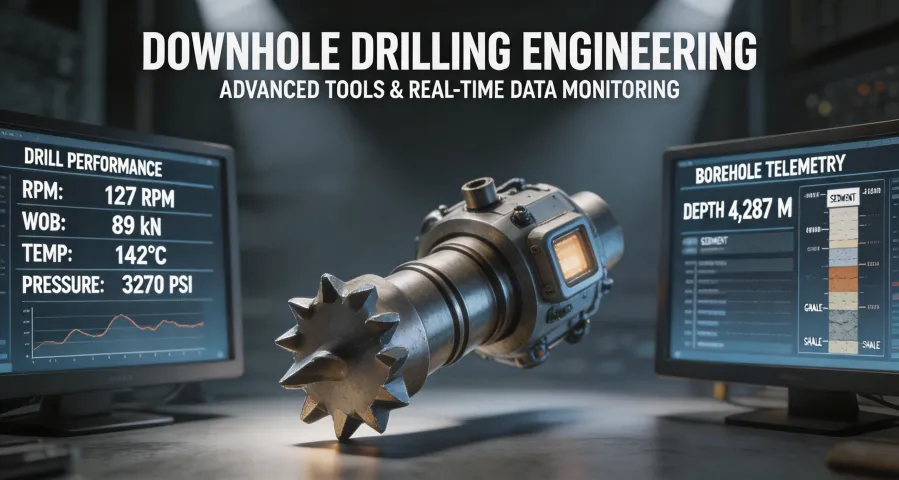
This is the one I see operators miss constantly. Real-time data access isn't a nice-to-have anymore—it's how you catch problems before they become NCRs. What was best practice in 2020 isn't good enough in 2025.
I ask for:
- Live access to job dashboards (not a daily PDF summary)
- Raw sensor data retention for at least 90 days post-job
- API access to pull data into our own systems
Some providers push back. They'll say their proprietary platform "doesn't allow external access." That's a soft no. When Halliburton pushed their OpenWire / DecisionSpace integrations a few years back, it changed what operators started expecting. If a provider won't give you raw data, you're trusting their interpretation of events instead of your own.
Step 6: Negotiate Deviation and Rework Clauses Before Mobilization
This is boring contract work, and it's where real money gets saved. Two clauses matter most:
- Deviation notification: Any change from spec requires written approval within X hours. No verbal "we adjusted on site."
- Rework cost allocation: If the provider deviates and the fix requires a second trip, who pays? Make it explicit.
I only believed how important this was after ignoring it once. We had a "minor" deviation on a fracturing job—sand concentration was off by about 8%. The provider said it was "within industry tolerance." Our spec didn't have that tolerance. The redo cost us roughly $18,000 and delayed the next stage by four days. Now the deviation clause is non-negotiable.
Step 7: Run a Scoped Pilot Before Full Commitment
No matter how strong the brand is, do one small job first. A single well, a single stage, a single tool run. Pick something with a clear, measurable outcome—then compare it against the spec you locked down in Step 1.
The pilot tells you more about a provider than any pitch deck. It shows you how their field crew communicates, how fast they escalate problems, and whether the data they hand over matches what you saw on site.
One caveat: a pilot on a simple vertical well doesn't tell you much about performance on a horizontal multi-stage. Match the pilot to the actual job complexity or the data's useless.
Common Mistakes I See Every Quarter
Assuming brand equals consistency. A Halliburton crew in the Permian and a Halliburton crew in the Middle East are the same logo, but not the same operation. Audit the local team, not the global reputation.
Letting the provider write the spec. If they draft the requirements, they'll draft them around their default capabilities. You write the spec; they respond to it.
Skipping the pilot because "we've used them before." Personnel changes, equipment rotates, basins have different geology. Last year's success doesn't transfer automatically.
Treating data access as an afterthought. By the time you need the raw sensor data, the job's over. Ask for it before mobilization, or you won't get it at all.
Bottom line: the checklist isn't about distrust. It's about making sure the service you get matches the service you specified. Halliburton—and any other provider worth hiring—will respect you more for having it ready. Prices and contract terms vary by basin and scope; verify current rates and terms directly with your provider before signing.