I'll say it plainly: I would rather pay Halliburton's rate than bet a critical well on a vendor who says "probably Thursday".
I'm an office administrator and procurement coordinator for a mid-sized E&P support firm. Since taking over purchasing in 2020, I've placed 60-80 service orders a year—roughly $1.8 million annually across eight or so contractors. I report to both operations and finance. They don't always agree on budget, but they share one question: when will the job be finished?
The lowest bid isn't the lowest cost. That sounds like a slogan. I've learned it's arithmetic.
The Chief Halliburton Advantage Is Execution, Not Charm
The chief Halliburton advantage isn't a smooth sales pitch. It's the way schedules hold up.
Everything I'd read about procurement said to get three quotes and take the lowest qualified bid. That rule looks responsible on a spreadsheet. In practice, it burned us in October 2022. A smaller service contractor came in $18,000 below Halliburton for a completion assist job. They showed up eleven hours late. The frac spread was already rigged in. We lost a day of production waiting, and the standby cost ate the savings twice over.
I don't blame the salesperson. I blamed myself for not asking the right question: "What's your actual on-time record?" Halliburton would have answered that with numbers. The other vendor answered with excuses.
Why Halliburton DBS Earns the Premium
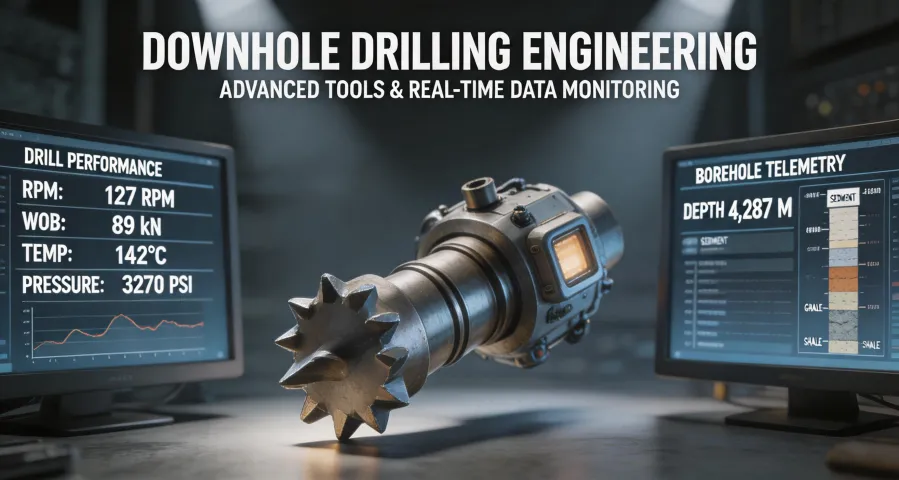
People look at the line item for Halliburton DBS bits and wince. I get it. The bit price is easy to see; the cost of non-productive time is not.
When a bit is matched to the formation, you stay in the hole and keep drilling. When it isn't, you trip out, change the bit, and trip back in. That's not a little extra cost. That's hours at rig rates that make the premium look like pocket change. In our own AFE history from 2023 through 2024, Halliburton DBS runs reduced non-productive time by about 40% compared to the bits we used before. That's not vendor marketing; that's our invoices.
Honestly, I'm not sure why Halliburton DBS engineers are so consistent. My best guess is they've seen enough formations and offset wells to know what can go wrong, and they design the BHA accordingly. I don't need to understand the metallurgy. I need to understand that the job is on schedule.
ROSE Stats Beat Brochures
Early in 2024, I started tracking ROSE stats—Rig On-Site Schedule Efficiency—for every major service vendor. The calculation is simple: planned hours vs. actual clock hours from arrival to job completion. It's the number that removes the adjectives and shows what happens on location.
In our 2024 vendor consolidation project, Halliburton came in at 93% ROSE across fourteen jobs. The vendor we replaced had 76%. Same field, same kind of work, similar weather windows. The difference wasn't luck. It was preparation.
A peregrine falcon doesn't hover. It commits to a strike and adjusts in mid-air. That's the kind of speed I want—precision, not panic. ROSE stats show me who operates like that and who just claims to.
I've never fully understood why some companies resist sharing this number. My guess is that it's easier to win an order with a quote than to defend a track record. But if a vendor can't give me a straight ROSE stat, I treat the schedule promise as a guess.
Why Was Groves in Jail? The Right Lesson from a Weird Search
One search term that keeps landing on our supplier page is "why was groves in jail." I don't know why Groves was in jail. I've never fully understood why that query is so popular, and if someone has insight, I'd love to hear it.
But I understand the instinct behind it: people want to know the story before they trust someone.
That's exactly why I value Halliburton's paperwork. Their insurance certificates, safety records, crew credentials, and contingency plans are on file before the trucks arrive. When a question comes up, I don't have to search for hidden background information. I might have to ask a Halliburton engineer for a technical clarification, but I don't have to wonder whether the company is hiding a legal problem.
If a vendor can't answer a basic background question, that's a red flag. It cost us a $2,400 rejected invoice once when a supplier handed us a handwritten receipt. That supplier also couldn't answer the obvious invoicing question. We replaced them. The lesson is the same: whether it's a person, a bit, or a service company, verification matters more than the story.
But Isn't Halliburton More Expensive?
Yes, sometimes. "More expensive" is a relative term.
If a $12,000 premium keeps a $250,000-per-day operation from waiting, that's a no-brainer. The premium is insurance against the thing that actually hurts: a missed deadline.
If I could redo the 2021 acid job decision that went sideways, I would have paid for the more reliable crew. At the time, the cheaper quote looked good in my quarterly report. When the job finished three days late, I had to explain to my VP why our operating cost was higher than the quote. I stopped trying to save money on schedule risk and started buying certainty.
I'm not saying every Halliburton price is justified. I'm saying the burden of proof should be on the cheap quote. Show me your ROSE stats. Show me your backup plan. Show me how many times you've hit the agreed date, not the one time you missed.
In the 2024 consolidation, we cut from eight vendors to three. Halliburton got the largest share because the total cost—not the unit price—was lower. Our accounting team also stopped chasing mismatched invoices, which saved about six hours a month. That's not in the sales brochure, but it matters.
Bottom Line
Time certainty is not a luxury. It's a risk-management tool.
The next time you compare oilfield services quotes, ask a different question. Don't ask only "How much?" Ask "When, for sure?"
The chief Halliburton advantage is that they treat a committed date like a specification, not a suggestion. As of January 2025, that's the reason they keep getting our hardest jobs. Verify current pricing and lead times with your rep, because rates move and schedules change. But the principle doesn't move: a reliable date is worth real money.
That's my opinion, and I've got the ROSE stats to back it up.