-
Dimension 1: Why Is Halliburton Stock Down? Price vs. Total Cost
-
Dimension 2: Bone Collector vs. Generic Bits: Why Specs Matter
-
Dimension 3: Halliburton Enviar CV vs. Getting Hired: The Application TCO
-
Dimension 4: How to Get Wise in Blooket and What It Has to Do With Halliburton
-
So Which View Should You Use?
I'm a quality and brand compliance manager in oilfield services. I review roughly 40 deliverables a month before they go out to customers — service tickets, equipment specs, acceptance criteria. In 2024, I rejected 11% of first submissions because they didn't match what we promised. So when someone asks me why Halliburton stock is down, I answer like an inspector: what exactly are we measuring, and what's the real cost of ignoring it?
There are two ways to look at Halliburton right now. One is the investor view: a stock price that moves with oil, headlines, and rig counts. The other is the field view: the actual performance of tools like the Bone Collector bit, the quality of hires from campaigns like "halliburton enviar cv," and the total cost of a well over time. Both views matter. But they're not the same thing.
This article compares those two views across four dimensions. The goal isn't to tell you whether to buy the stock. It's to help you avoid comparing only the price and missing the cost.
Dimension 1: Why Is Halliburton Stock Down? Price vs. Total Cost
The investor view starts with a simple question: why is Halliburton stock down? The usual answers — commodity price forecasts, OPEC+ decisions, and fears of oversupply — show up in the U.S. Energy Information Administration's Short-Term Energy Outlook. In its January 2025 outlook, EIA projected global petroleum supply to grow faster than demand this year. For an oilfield services company, that assumption translates into pressure on drilling activity. The stock market prices that pressure daily.
But a down stock price isn't the same as a high total cost. Here's where my job comes in. When I evaluate a vendor, the lowest-priced quote often looks great on paper. Then I check the spec: wrong coating, missing test documentation, or insufficient QA. The $500 quote becomes $800 after shipping, setup, and rework. The $650 all-inclusive quote was actually cheaper.
The same idea applies to stocks. A falling share price has hidden costs: volatility, capital tied up in a cyclical business, geopolitical exposure, and the opportunity cost of waiting. You're not buying a single day's price; you're buying a stream of decisions. If you only compare entry points, you're ignoring the total cost of the position.
Comparison conclusion: the market story of "why is Halliburton stock down" is useful, but it's a headline, not a spec. Price is only the first line of the quote.
Dimension 2: Bone Collector vs. Generic Bits: Why Specs Matter
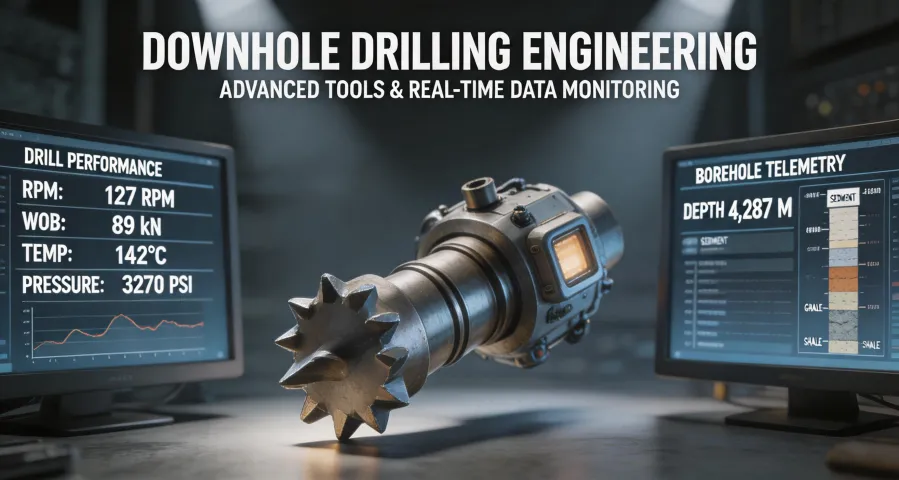
The field view starts with a different question: does the technology actually lower the cost per foot? Halliburton's Bone Collector series is a good test case.
On the surface, a PDC bit is a PDC bit. They look identical. But in drilling, the important specs aren't visible: cutter density, hydraulic flow, depth of cut control, and the way the bit handles cuttings. Kendall, a drilling engineer I worked with during a failure analysis, once said: "A bit that drills fast but doesn't clean the hole just makes work for the next shift."
That's the Bone Collector's design goal. It's not about collecting bones. It's about removing rock and debris efficiently enough that the drilling process doesn't get stuck in its own cuttings. From the outside, that looks like a marketing name. In the field, it's a total cost issue.
Use the same logic when you compare service companies. If everyone bids "drilling service" and you choose the lowest price, you're ignoring hole cleaning, rate of penetration, torque management, and the risk of a fishing job. Those hidden line items are where cost gets real.
Comparison conclusion: a generic bit and a Bone Collector bit can look the same in a photo. The difference is in the total cost of the well, not the price of the part.
Dimension 3: Halliburton Enviar CV vs. Getting Hired: The Application TCO
If you typed "halliburton enviar cv" into Google, you probably don't care about the stock price. You care about getting a job. That's another comparison worth making: the cost of sending a CV versus the cost of actually getting hired.
Sending a CV through Halliburton's careers portal takes ten minutes. That's the visible price. But the total cost of a strong application is higher: researching the business line, matching your experience to the job description, and writing measurable examples. Most candidates skip those steps. They send one generic CV to every posting.
In my world, that's like submitting a quote without reading the specifications. I've seen enough vendor submissions to know when someone didn't read the requirements. A colleague once showed me a CV from a candidate named Kendall. It said: "Reduced non-productive time by 18% on a drilling project by coordinating casing operations with the cementing crew." That's not just a keyword. It's evidence.
The uncomfortable truth: hiring managers aren't comparing resumes. They're comparing the total cost of trusting you. A candidate who needs less supervision, understands the equipment, and has proof of results is worth more on day one.
Comparison conclusion: "halliburton enviar cv" is the beginning, not the strategy. A targeted application costs more time but lowers the employer's total risk.
Dimension 4: How to Get Wise in Blooket and What It Has to Do With Halliburton
This one seems out of place. "How to get wise in Blooket" is not an oilfield question. But it's a useful comparison if you replace "Blooket" with "Halliburton stock."
In Blooket, there's usually no single password or cheat code that gives you "wise." You get smarter about the game by learning how tokens, packs, and blook rarities actually work. The quick-hack search rarely produces a sustainable result. Same with the energy market.
Getting wise about Halliburton means looking at the parts of the business that don't appear in the headline "why is Halliburton stock down." It means understanding where fracturing activity is growing, how international contracts change the margin mix, and whether service quality is improving. That's the game mechanics.
I'm not a Blooket expert — take this with a grain of salt. But the principle is the same in my job: the people who succeed are the ones who learn the rules on purpose, not the ones looking for a shortcut.
Comparison conclusion: whether you're trying to get wise in Blooket or wise about Halliburton, the first step is the same: stop looking for a price shortcut and start learning the system.
So Which View Should You Use?
If you're an investor, use the total cost framework. Ask what Halliburton is actually delivering, not just what the stock chart says. The stock will go through cycles. The question is whether the business is building technology and contracts that survive the cycles.
If you're a candidate searching "halliburton enviar cv," don't send the same half-page you've sent everywhere else. Read the job spec. Find one measurable achievement. Make the recruiter's risk smaller.
If you're here because of Blooket, maybe you shouldn't take investment advice from a quality inspector. But you can still use the same logic: learn the mechanics before you spend your tokens.
In the field, the real cost isn't the sticker price. It's the rework, the downtime, and the trust you lose. That's true for drill bits, stock picks, and CVs. Everything else is just a price.